The city of Rivne is on the verge of a large-scale transformation of the housing sector. In response to the challenges of energy security and rising tariffs, the Department of Economic Development of the Rivne City Council, together with European partners – the Czech NGO NESEHNUTI BRNO, is launching the LIFE24-CET-LEEP project — “A Missing Link to Energy Efficient Performance of Buildings”. This initiative, funded by the EU LIFE program, is designed to bridge the gap between residents’ desire to live in warmth and their real technical and financial capabilities.
THE ISSUE: WHY IS THIS CRITICALLY NECESSARY NOW?
The housing stock of Rivne, like that of most Ukrainian cities, is largely made up of Soviet-era buildings built before the 1990s.
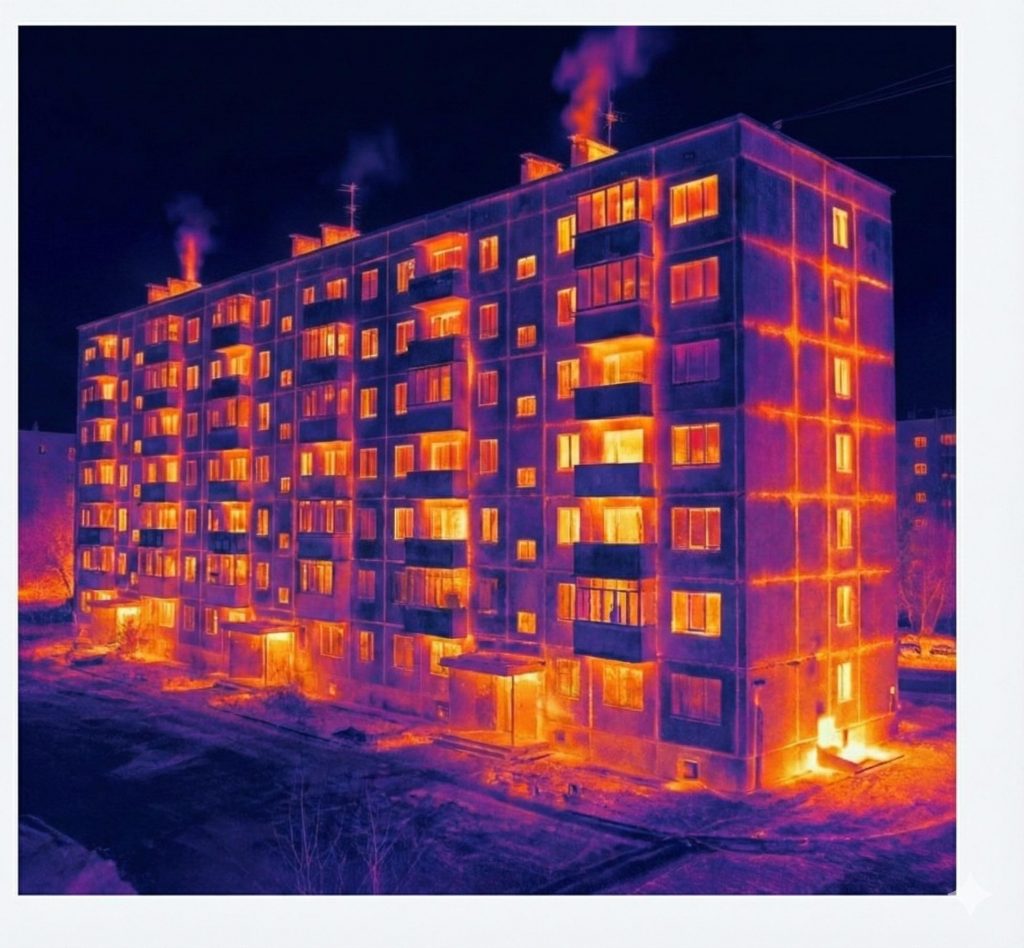
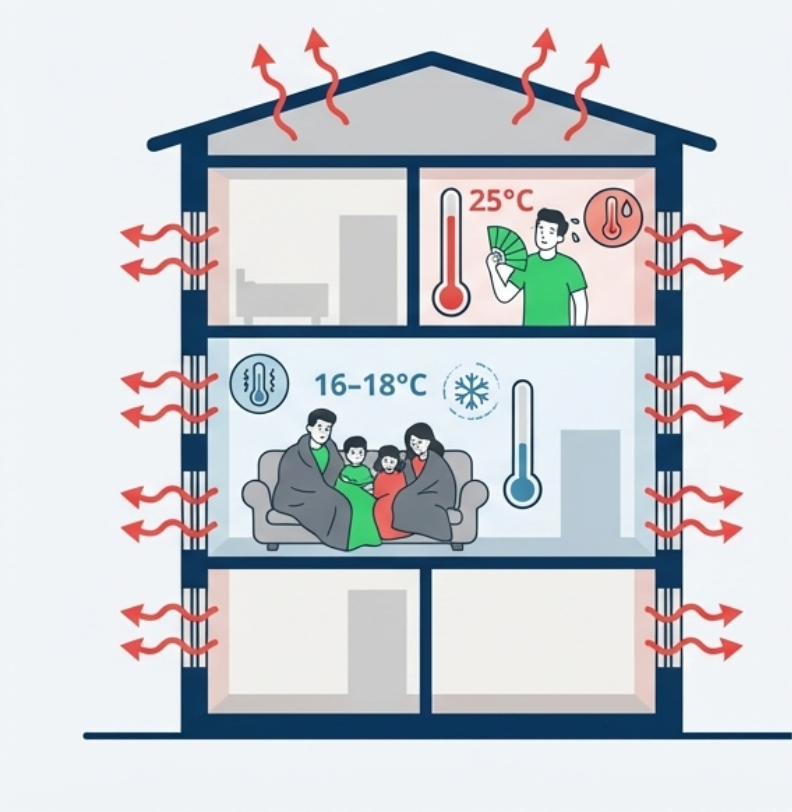
• Technical condition of “panel” and “Khrushchev” houses: A significant part of the houses belongs to the series 1-447 (brick) and 1-464 (panel). Their service life without major repairs has already expired or is approaching a critical limit. Low thermal resistance of the walls, worn-out engineering networks and outdated windows lead to enormous heat loss.
• Energy poverty: Residents are forced to pay high heating bills, “heating the street.” At the same time, due to a lack of funds and knowledge, they do not dare to undertake complex repairs.
• Distrust of financing: There is a psychological barrier to obtaining loans. Banks consider condominiums to be risky borrowers, and residents are afraid of debt obligations.
The LEEP project was created precisely to become that “missing link” that would connect residents, technical experts, and financial resources.
PROJECT OBJECTIVES (Specific tasks)
• Objective 1: Ensure access of Rivne city condominiums to modern and integrated market solutions for energy efficiency.
• Objective 2: Improve access of condominium associations to financial instruments for implementing energy efficiency measures.
• OBJECTIVE 3: Demonstrate an example of integrated energy efficiency services in Ukraine through the establishment of an Energy Efficiency Office (EEO).
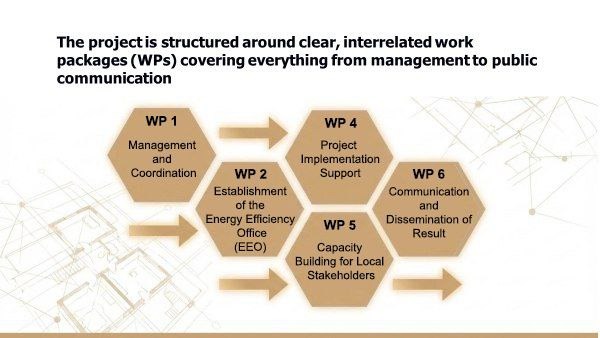
MAIN ACTIVITIES (Work Packages)
• Creation of the Office of Energy Efficiency (OEE): development of a “one-stop shop” business model for providing advice and technical support.
• Support for condominium associations: assistance in conducting energy audits, developing estimates, and support in selecting contractors.
• Financial literacy: training in developing investment portfolios and attracting loans/grants.
• Exchange of experience: study visits to the Czech Republic and involvement of international experts
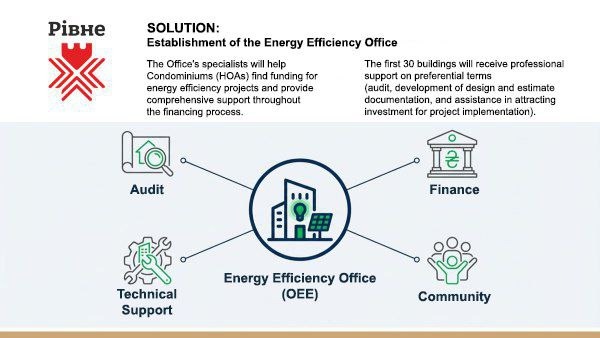
A key element of the project is the creation of the Office of Energy Efficiency (OEE) – a specialized institution that will operate on the principle of a “One-Stop-Shop”.
What specifically will OEE do for residents? OEE will not just provide consultations, but will accompany the condominium association throughout the entire “client journey”:
1. Technical diagnostics: Conducting professional energy audits to determine the real condition of the house and the places of greatest heat loss.
2. Project support: Assistance in developing estimate documentation, which is a prerequisite for receiving any grants.
3. Financial Navigator: Selection of the optimal combination of funding sources (state grants + city programs + loans).
4. Project management: Assistance in selecting contractors, legal support of contracts, and technical supervision of the quality of work.
To ensure sustainability, the Office is planned as a self-sustaining structure, which will be financed by providing paid services (on preferential terms for program participants), commissions from implemented projects, and grant support.
TECHNOLOGICAL APPROACH: FROM ITP TO FULL THERMAL MODERNIZATION
The project promotes the concept of phased and deep modernization, based on advanced engineering practices and standards of the Energodim program.
Step 1. The “heart” of the house is the ITP. The first and most important measure is to install an Individual Heat Point (ITP) with weather-dependent regulation. This allows you to avoid overheating on warm days and automatically regulate the heat supply depending on the temperature outside. Savings at this stage alone can reach 15-25%.
Step 2. Hydraulic balancing. To solve the problem of hot upper floors and cold lower floors (or vice versa), the risers are balanced. This ensures even heat distribution across all apartments.
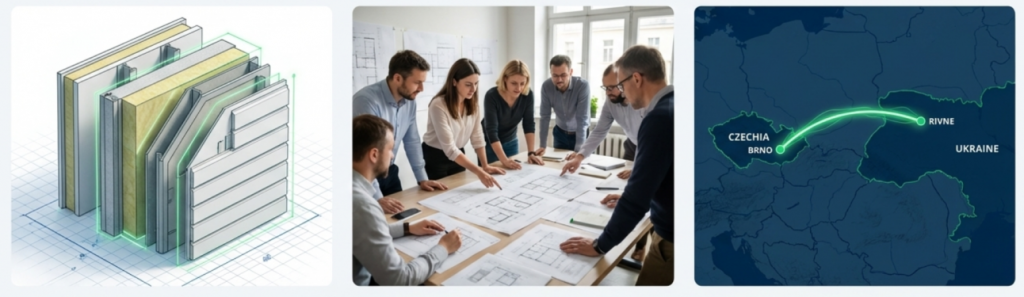
Step 3. Thermal insulation of the shell (“Thermos”). Only after setting up the heating system is it advisable to proceed to the costly work of insulating the facades, roof and basement. The technologies of “wet facade” or ventilated facades with mineral wool or polystyrene foam 100-150 mm thick are used, which allows achieving the regulatory heat transfer resistance.
FINANCIAL MODEL: HOW TO MAKE REPAIRS AFFORDABLE?
The LEEP project integrates various financial instruments to minimize the burden on residents’ wallets. Thanks to the synergy of programs, apartment owners can pay only 10-30% of the actual cost of the work.
Sources of funding:
1. EU Grant (LIFE): Covers the costs of establishing the Office, conducting 30 free energy audits, developing technical documentation, and training specialists.
2. Energy Efficiency Fund (Energodim Program): Compensates up to 70% of the cost of construction work and materials for condominiums.
3. Municipal program (Rivne): The city co-finances projects: up to 70% for capital repairs and up to 90% for the implementation of renewable energy sources and fire prevention measures. The limit per project is UAH 1.5 million.
4. Bank lending: Attracting loans from partner banks (for example, Globus Bank) to cover the share of the condominium association, with the possibility of interest compensation from the regional budget.
Digital tool: An online calculator (chat bot) will be created to simplify calculations. Residents will be able to estimate the cost of modernizing their home in 1 minute, calculate the payback period, and see real savings in payments.

INTERNATIONAL PARTNERSHIP AND SCALE-UP
An important component of the project is cooperation with the Czech organization NESEHNUTI Brno.
• Exchange of experience: The Czech Republic has already gone through the process of mass renovation of prefabricated houses. NESEHNUTI experts will transfer this experience to Ukrainian specialists through study visits and mentoring programs.
• Creation of a knowledge base: A “Catalog of Typical Energy Efficiency Solutions” and an online training platform will be developed, which will allow scaling the successful experience of Rivne to other cities in Ukraine.
RESULTS IN NUMBERS (KPI)
By 2028, the project plans to achieve the following indicators:
• 30 comprehensively modernized apartment buildings (pilot projects).
• Attracting over 3.5 million euros in investments into the city’s residential sector.
• Primary energy savings: 3.42 GWh/year.
• Reduction of CO₂ emissions: 768 tons/year.
• Raising awareness of 75,000 citizens about the benefits of energy efficiency.
The LEEP project is not just about renovating houses, it is about creating a new culture of energy consumption and managing common property, bringing Rivne closer to European standards of living and energy independence.